
 BROWSE THROUGH CATEGORIES

Steels
4116 stainless steel technical analysis and performance guide
Feb
4116 stainless steelindustry X50CrMoV15 with the standard code, known for high-performance a martensitic alloy. Metallurgy German (DIN 1.4116) which is a product of this material, especially cutting tools, medical devices, and high-mechanical properties of an optimized material used in kitchen equipment segment. In this document, 4116 stainless steel chemical composition, mechanical properties, heat treatment steel technical parameters and other types of benchmarks are analyzed in a comprehensive manner.
- 1. Chemical composition and elemental analysis
- 2. Mechanical properties and physical data
- 3. Processes and hardening heat treatment (Quenching & Tempering)
- 4. Corrosion resistance and chemical stability
- 5. Industrial Comparisons: 4116 others, etc.
- 4116 vs 304 and 316 (Austenitic Steel)
- 4116 vs 420HC and 440C
- 4116 vs N690 (Böhler)
- 6. In Which The Country's Steel? (Origin and standards)
- 7. Maintenance, sharpening and methods of use
- 8. Conclusion: From The Perspective Of Engineering 4116
- Frequently asked questions (FAQ)
1. Chemical composition and elemental analysis
Performance characteristics of the 4116 steel, the content of alloying elements in the precise ratio is based on. X50CrMoV15direct technical survey gives information about the content of the material: “X” the high-Alloy, “50” rbon at a rate of 0.50 to represent.
| Element | Symbol | Ratio (%) | Technical Function |
|---|---|---|---|
| Carbon | C | 0.45 – 0.55 | Hardness, wear resistance and tensile strength provides. |
| Chrome | Cr | 14.0 – 15.0 | Corrosion resistance (rustproofing) and provides hardenability. |
| Molybdenum | Mo | 0.50 – 0.80 | Increases the resistance to pitting corrosion and tempering resistance. |
| Vanadium | V | 0.10 – 0.20 | Sharpness increases and prolongs the life of the grain structure and toughness thinner. |
| Manganese | Mn | 1.00 Max | Enables and enhances the quality of casting deoxidation. |
| Silicon | Si | 1.00 Max | Strength increases, and the ferrite phase is stabilized. |
Vanadium standard steel 420 or 440 series that separates it from the contribution that the technical details is most critical. Vanadium carbides of the steel grain structure at the microscopic level by stabilizing the formation of the mouth allows a smooth and durable cutter with more.
2. Mechanical properties and physical data
The success of mechanical 4116 stainless steel, hardness and toughness (toughness) is based on the balance between.
- Hardness (Hardness): After heat treatment 54-57 HRC (Rockwell C) reaches this value. This December, the material is easily machined to provide both the structure of both the mouth.
- Tensile Strength: 700 – 900 MPa (softened in case).
- Modulus Of Elasticity: 215 GPa.
- Thermal Conductivity: 30 W/m.K (20°C).
This physical data, 4116 Steel, has been accepted as the standard in professional kitchen knives explains why. Material against impacts (like the knife hit bone) showed resistance to fracture, while the molecular structure due to molecular breakdown without the high acuity can achieve.
3. Processes and hardening heat treatment (Quenching & Tempering)
The real potential of steel 4116 applied heat treatment (heat treatment) with the quality of arises. The process usually consists of the following stages:
- Pre-Heating: To reduce tension, the material slowly 600-700°C by removing the band.
- Ostenitleme (Austenitizing): Steel 1000°C and 1050°C by heating of the carbon in the matrix between completely dissolve.
- Quenching (Quenching): The material is rapidly cooled by oil or using compressed air. At this stage, because the atomic structure can be determined.
- Tempering (Tempering): 55-57 HRC hardness of the material and targeted for bringing it to resolve the fragility of 150-250°C. to be heated again.
Incorrect heat treatment, 4116 steel may decrease the corrosion resistance of the material can cause it to become brittle or excessively. L'arte My products used in steels are reviewed in a controlled manner of these cycles in a laboratory environment.
4. Corrosion resistance and chemical stability
The corrosion resistance of stainless steels, the surface of microscopic Chromium Oxide (Cr2O3) depends on the passivation layer. 4116 steel, 15% chromium content with high corrosion resistant” class.
- Pitting (Pitting) Corrosion: Content Molybdenumespecially in environments containing chloride (table salt) into regional acts as a barrier against corrosion attacks occurring.
- Acid Resistance: Lemon, vinegar and protects the surface structure in contact with acidic foods such as tomato. However, technically, no stainless steel “rustproofing” is not guaranteed; only the “corrosion resistant”. Long-term aggressive chemical can disrupt the formation of the contact surface.
5. Industrial Comparisons: 4116 others, etc.
Error dropped to the point that most of the users, is to think that it has all the same properties of stainless steel.
4116 vs 304 and 316 (Austenitic Steel)
304 and 316 Steels austenitic structure. This steel cannot be hardened by heat treatment and repels the magnet. The knife can't be built because the hardness is too low (only dinner knife/cutlery can be). If martenzitik 4116; so that it could get hard and the “cutter” in nature.
4116 vs 420HC and 440C
- 420HC: According to 4116 contains less carbon, abrasion resistance is lower.
- 440C: Higher carbon (%1) includes, but are more brittle and harder as 4116 corrosion resistance is not high. 4116, these two endpoints between the “ideal balance” of the steel.
4116 vs N690 (Böhler)
N690, %1.07 contains cobalt and premium carbon steel. Over 60 HRC might. However, the cost 3-4 times more according to 4116 and the grinding operation, it is impossible for the amateur users. 4116, sharpness and sustainable cost/performance ratio in the global industry standard.
6. In Which The Country's Steel? (Origin and standards)
4116 steelOriginating in Germany as a standard. Especially Solingen the world's giant knife manufacturers in the area (Wusthof, Zwilling, etc.) the main material. Therefore, in the market, “German steel” as marked. Nowadays, vehicles conformity with din 1.4116 standards in different countries, is the only element in determining the quality of the materials.
7. Maintenance, sharpening and methods of use
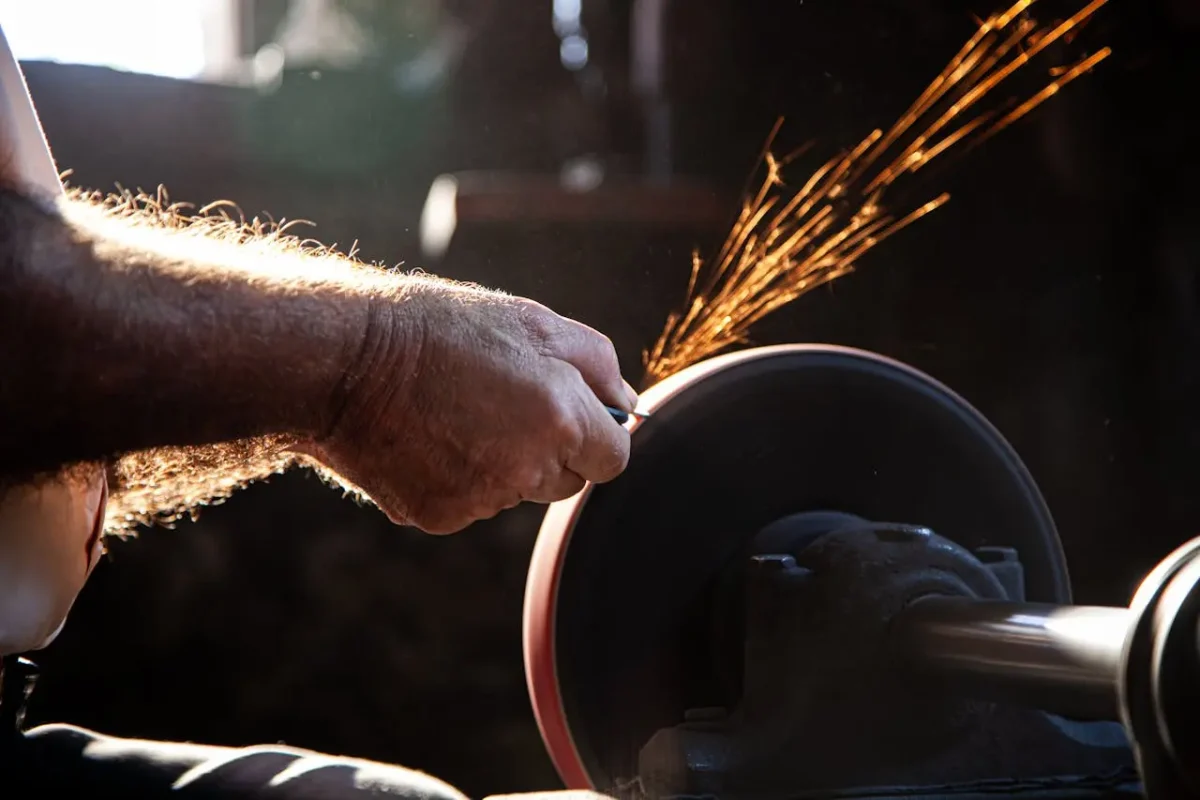
From a technical perspective to maximize the performance of a blade which is manufactured from steel 4116, these data should be followed:
- Sharpening Angle: Ideal for sharpening angle steel 4116 total 30-35 degrees (15-17 for each surface.5 degrees).
- Sharpening Equipment: Due to vanadium carbides, ceramic sharpener or a diamond gives the best result. 4116 gives slower results on natural stones that are used for carbon steels.
- Cleaning: High-temperature detergents (dish washer), but will not affect the balance of tempering the steel passivation layer on the surface, it can penetrate. In this time, the “micro-pitting” of the formation. Technical advice: hand wash and dry storage.
8. Conclusion: From The Perspective Of Engineering 4116
4116 stainless steel, a single feature of a material (for example, only hardness) not all properties (corrosion resistance, toughness, ease of sharpening, cost) is an engineering achievement that has been optimised. L'arte preferable to the steel in my product range to the end user “seamless and sustainable” is the commitment to provide cutting experience.
Our exclusive collections to examine that offers quality and aesthetics Discover The World Of L'arte My! Take a seat at the kitchen, where it meets the art of modern engineering.
Frequently asked questions (FAQ)
